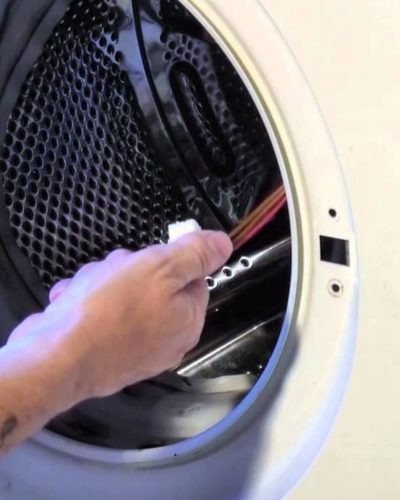
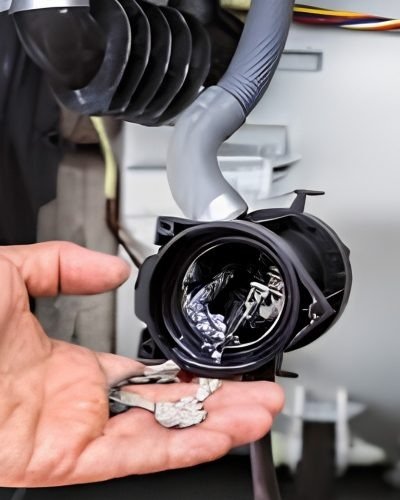
A washing machine drum that won't turn, spins unevenly, or grinds during the cycle is one of the most common repair calls we get across Dubai, Sharjah and Ajman. The drum sits at the centre of the machine, held by bearings and driven by a belt or direct-drive motor - when any of those parts wears out, the symptom is almost always the same: the wash and rinse still fill with water, but the clothes come out barely moved, or the machine shakes violently trying to spin.
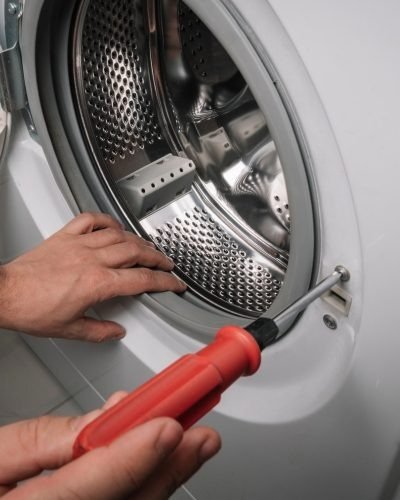
The bearing supporting the drum wears down over years of use, causing play in the drum and a deep grinding or rumbling noise that gets louder over weeks. This is the single most common cause of drum-related noise complaints.
On belt-driven machines, a snapped or slipped belt means the motor runs but never transfers power to the drum - you'll hear the motor humming with no drum movement at all.
On brushed motors, worn carbon brushes reduce torque until the drum can no longer overcome the weight of a full load, especially noticeable on spin cycles.
If the door isn't detected as fully closed and locked, the control board deliberately prevents the drum from turning as a safety measure - this is often mistaken for a drum fault.
Modern machines stop the spin cycle if the load-balance sensor detects an uneven load, which can look identical to a genuine mechanical fault until the load is redistributed.
Call a technician when: you hear the motor running but the drum stays still, there's a grinding noise that's getting louder week over week, or the drum has noticeable play when moved by hand - all three point to a mechanical fault that needs proper diagnosis rather than a quick reset.
Samsung and LG direct-drive machines rarely suffer belt failure since the motor connects straight to the drum, but suspension spring and shock absorber wear is common after 4-5 years and produces a very similar-sounding drum complaint.
These typically use a belt-driven drum system - a burning rubber smell alongside a stalled drum is a strong sign of a slipped or snapped belt rather than the bearing itself.
Carbon brush wear on the drive motor is more common here than on premium direct-drive machines, and is a comparatively inexpensive fix when caught before the brushes fail completely.
A grinding noise, specifically during the spin cycle, is the classic sign of worn drum bearings. It typically starts quiet and gets progressively louder over several weeks, and continuing to use the machine risks the bearing failing completely and damaging the outer tub.
No - the drum should agitate periodically throughout a wash cycle. If it's completely still while the machine is clearly running (filling, humming), that points to a belt, motor, or door-interlock fault rather than something you should wait out.
Checking the door latch and load balance is safe to do yourself. Anything beyond that - accessing the belt, motor, or bearing - involves partial disassembly and carries real risk of turning a moderate repair into a total loss if done incorrectly, so it's a job for a technician.
Bearing replacement usually requires partial disassembly of the outer tub, so it takes longer than a filter or door-lock fix, but it's still normally a single same-day visit when diagnosed early - before the bearing failure damages surrounding components.
We offer drum repair in 190+ neighbourhoods across all three emirates — from Downtown Dubai and Dubai Marina to Al Nahda Sharjah and Ajman Downtown — with the same upfront pricing, genuine parts and 90-day warranty everywhere we go.
Same-day service, upfront pricing, 90-day warranty.